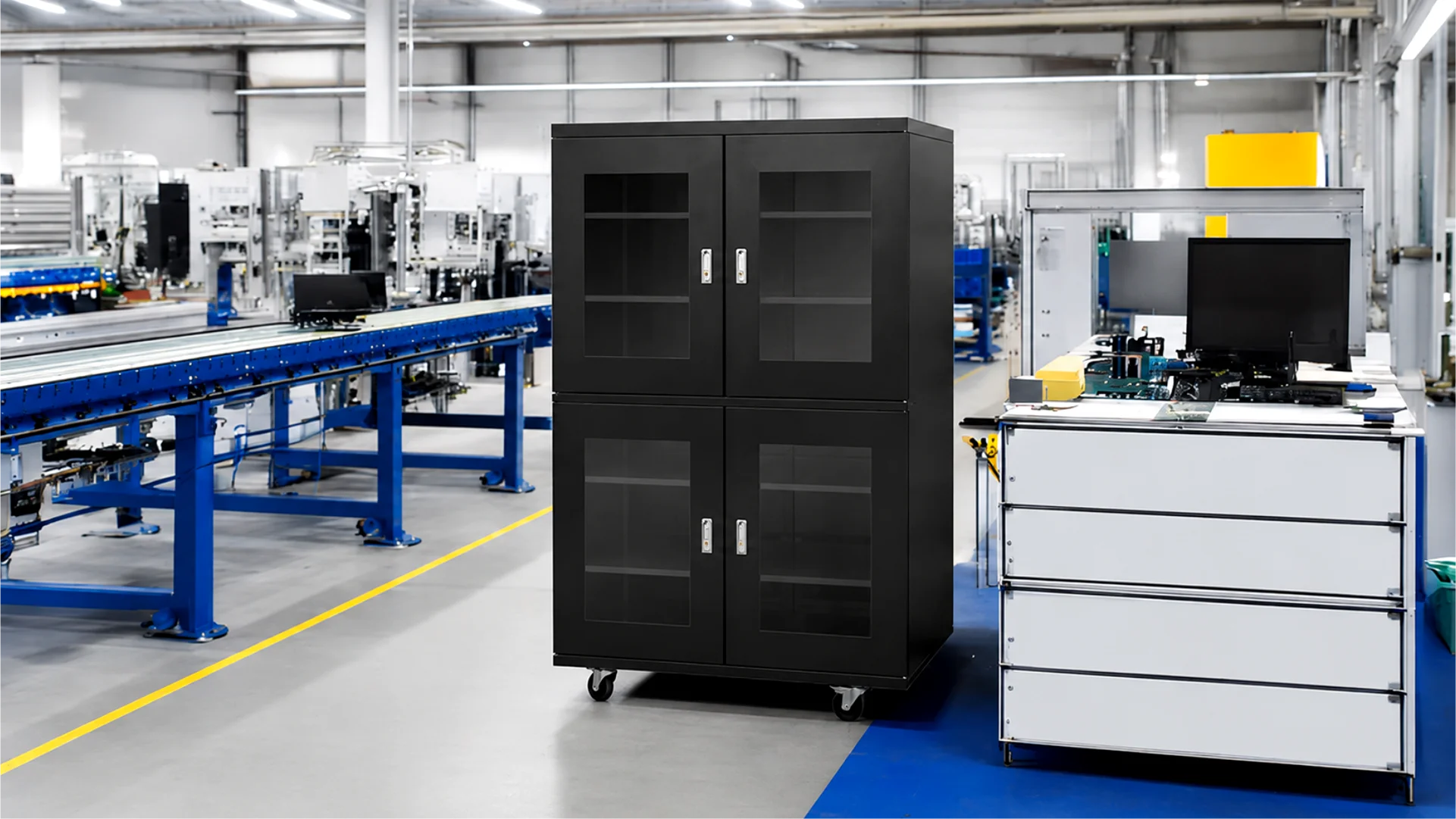

Every electronics engineer, photographer, and manufacturing engineer knows the feeling: a perfectly functional component, lens or PCB assembly - damaged not by a blow or accidental use, but by the invisible humidity in the air. Humidity damage and rust are among the most avoidable sources of equipment damage in the world. But thousands of rupees' worth of camera equipment, electronics, and other industrial equipment are ruined each year because they were improperly stored.
electronic dry cabinets for sensitive ICs and PCBs, to dry cabinets for delicate camera lenses and camera bodies, to industrial humidity control dry cabinets for your manufacturing plant, we've got you covered with all the information you need on types, features, best brands, and the dry cabinet price in India for 2026.
A humidity-controlled dry cabinet is an enclosed cabinet that keeps the relative humidity (RH) level inside low - typically 35-50% RH for general electronics, and 40-50% RH for camera equipment. A dry storage cabinet is different from conventional cupboards or boxes as it actively removes moisture from the storage environment using integral dehumidifying technology.
Air humidity causes electrochemical oxidation of metal contacts, printed circuit board (PCB) traces and connector pins. Oxidation results in higher electrical resistance, intermittent shorts and ultimately circuit failure. For optical lenses (such as camera lenses), moisture encourages fungal growth, a slowly spreading contamination that permanently scars glass surfaces and erodes coating layers.
For components like sensors, relays, motor controllers, and semiconductor modules stored in a warehouse or stockroom with variable temperature, humidity cycling (warm/cold daily cycles) is especially harmful. It creates a cycle of condensation on the surfaces of components, accelerating corrosion much more than in areas of constant humidity.
A dry cabinet with dehumidification prevents this cycle by keeping humidity levels constant and low at all times, independent of outdoor and indoor conditions.
The two most common forms of dehumidification in modern dry cabinets are:
Thermoelectric (Peltier) Dehumidification: The most common type used in consumer and prosumer dry cabinets. Moisture condenses on a cold surface inside the cabinet and is drained away via a Peltier element. Noiseless, efficient, and low maintenance. Average power: 3-8 watts. It's the default technology in digital dry cabinets in India.
Desiccant Dehumidification: Uses silica gel or molecular sieve desiccant material. These can be regenerating desiccant cartridges that are heated to release absorbed moisture. Ideal for very low humidity levels (below 35% RH) or in a very humid environment.
Electronic Humidity Control: High-end digital dry cabinets have a digital hygrometer and humidity controller. The controller will turn the dehumidifying element on and off to achieve the desired humidity level ±5% RH. This is important for accurate storage where the desired RH is crucial (e.g. 40-45% RH for camera bodies, 35-40% RH for bare semiconductors).
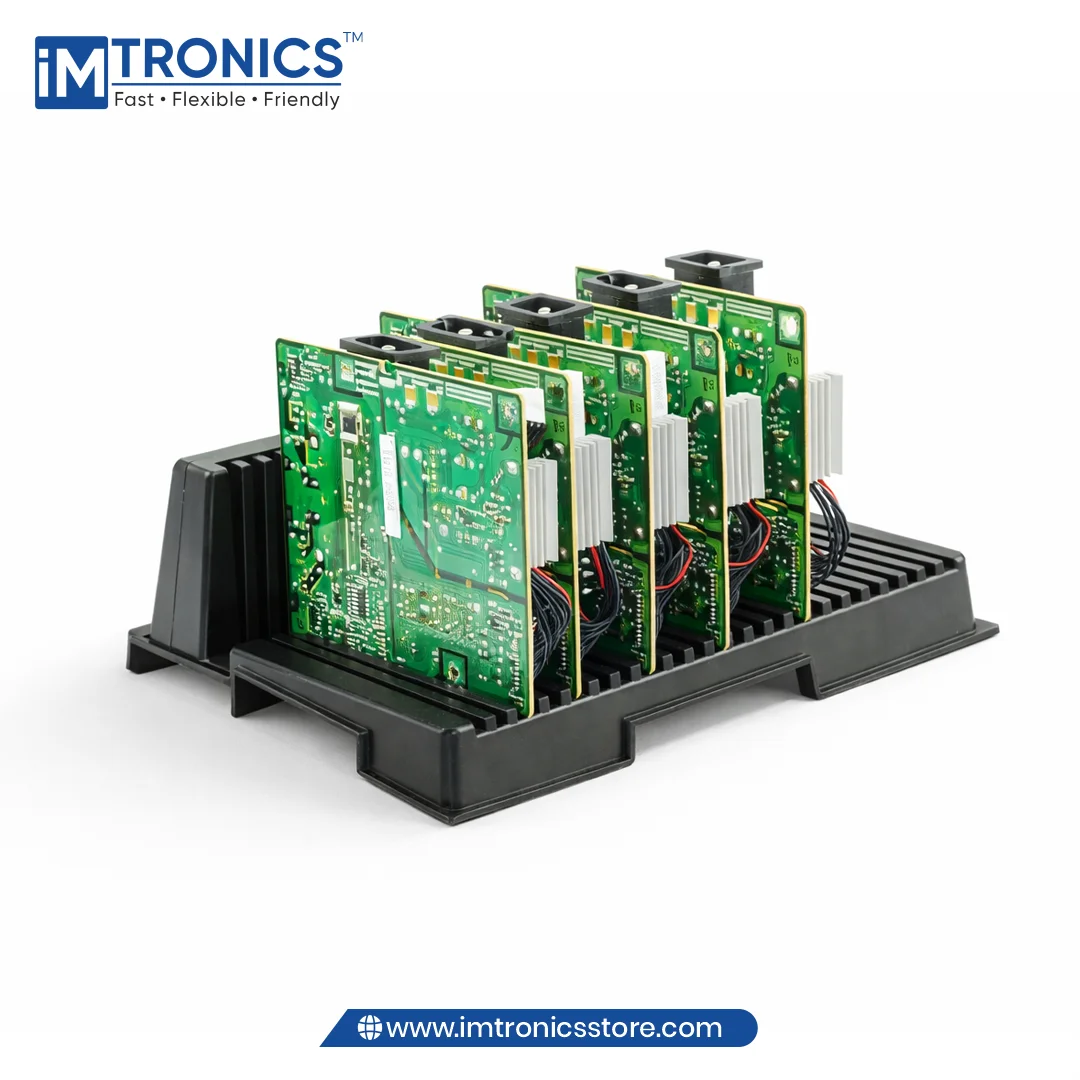
Ideal for storing printed circuit boards, semiconductors, IC, SMD components, sensors, relays, and other sensitive electronics. Electronic dry cabinets typically have RH levels between 35% and 50%. They usually have anti-static shelving to protect against ESD damage in addition to moisture protection.
Ideal for: Electronics manufacturers, repair services, PCB assembly, research & development, parts storage.
Available sizes in India: 20 - 500+ litres.
Camera equipment (DSLR and mirrorless bodies, interchangeable lenses, telescopes, binoculars, film stock) is highly susceptible to fungus in India's wet environment. The relative humidity (RH) in a dry cabinet for a camera is typically maintained at 40-50%, an international standard for storing optical equipment (too dry and the lubricants in the camera lenses dry out; too wet and fungus grows).
The top dry cabinet for a camera in India will typically be 22 litres (fits 1-2 camera bodies and 3-4 lenses), up to 100+ litres for studio equipment. Opt for clear doors (for easy viewing), adjustable shelves (to store zoom lenses) and ±5% RH accuracy.
Sturdy, rugged industrial models. Ideal for storing tooling, measuring instruments, metal components, moulds, and moisture-sensitive products such as adhesives and moisture-absorbing polymers. Typically, powder-coated steel construction and heavy-duty shelves.
Designed for extremely low RH levels - as low as 10-20% RH - in critical applications. Commonly found in semiconductor process equipment, pharmaceutical storage, and optics. Dry cabinets typically employ desiccant wheel technology and can be much more costly than standard thermoelectric dry cabinets.
Humidity Control Dry Cabinet (Smart Models)
The newest smart dry cabinets are WiFi connected, with humidity and temperature monitoring through a mobile phone app, an instrument logger (tracks humidity and temperature history) and set schedules. Certain models can send notifications if humidity levels stray from the desired range - a critical feature for industrial humidity control when dry cabinets are left unattended. These are the top-end digital dry cabinet models

Get all latest information on events, sales and offer
No comments yet. Be the first to share your thoughts.
Your email address will not be published. Required fields are marked *